

Editor
Choice
Recent
Posts

SEO In Ireland
Why Your Business Might Need an SEO Company in Ireland
For any business operating in Ireland, establishing a strong online presence is crucial for growth. While some companies manage SEO (Search Engine Optimization) in-house, many find significant value in partnering with a specialized local agency like Sink Or Swim Marketing. Here’s a look at the key reasons why and what to consider.
Core Benefits of Hiring a Local SEO Agency
Partnering with an SEO company in Ireland offers several strategic advantages tailored to the local market:
-
Deep Local Market Expertise: A local agency understands the specific behaviors of Irish consumers, including search patterns, local dialects, and preferred platforms. They can optimize for Irish English spellings and terminology, ensuring your content resonates locally.
-
Handling Technical Complexity: SEO involves technical website audits, on-page optimization for speed and mobile-friendliness, and building a robust backlink profile. Agencies have the expertise and tools to manage these complex tasks efficiently.
-
Cost and Time Efficiency: Developing and executing a full-scale SEO strategy requires significant time and specialized skills. Outsourcing this work allows your team to focus on core business operations, while the agency focuses on driving your online visibility.
-
Building Sustainable Growth & Credibility: Unlike paid advertising, which stops generating traffic the moment you stop paying, SEO builds a foundation of organic visibility. Ranking highly for relevant searches in Ireland also inherently builds trust and brand authority with potential customers.
-
Adapting to Changes: Search engine algorithms and trends (like voice search) change constantly. A dedicated agency stays current with these updates and adapts your strategy accordingly to protect and improve your rankings.
Key Considerations for the Irish Market
A specialized local agency is particularly adept at navigating factors unique to Ireland:
-
Local SEO for “Bricks and Clicks”: For businesses with a physical location, optimizing for “near me” searches is vital. An agency will ensure your Google Business Profile is fully optimized with accurate information, photos, and reviews. They will also manage local citations on Irish business directories.
-
Cultural and Linguistic Nuances: Beyond basic keyword translation, effective SEO for Ireland understands regional terms and may involve creating bilingual content for Gaeltacht areas or optimizing for specific local platforms.
Understanding the Investment
SEO is typically a long-term engagement. Costs in Ireland can vary based on the scope of work, your business size, and the competitiveness of your industry. Common pricing models include:
-
Monthly Retainers: For ongoing, comprehensive strategy management.
-
Project-Based Fees: For one-off projects like a technical website audit or a specific content campaign.
-
Hourly Rates: For consultancy or smaller, defined tasks.
Evaluating Potential Partners
When looking for an SEO company in Ireland, consider asking:
-
Can you show me case studies or results from businesses similar to mine in Ireland?
-
What is your specific approach to local SEO for the Irish market?
-
How do you measure success and report on progress?
-
What is your strategy for link-building and content creation?
Alternatives to a Full-Service Agency
If hiring an agency isn’t the right fit, other options exist:
-
In-House SEO Manager: Provides full control but requires a significant commitment in salary, benefits, and ongoing training.
-
Freelance SEO Consultant: Offers flexibility and can be a good solution for audits, specific projects, or initial strategy setup.
-
DIY Approach: You can use free tools like Google Search Console and Google Analytics to learn and manage basics. However, this requires a substantial time investment and a willingness to navigate a steep learning curve, especially for technical issues.
Ultimately, an SEO company in Ireland is most valuable for businesses that aim to establish a strong, credible local presence efficiently, navigate the specific Irish digital landscape, and build a sustainable, cost-effective source of customer traffic for long-term growth.
If you have a specific industry or location in mind, researching strategies for that niche can provide more targeted insights.
How Smart Websites Work With CRMs
How to Build a Business That Mostly Runs Itself
Let me tell you about Sarah, who runs a small specialty food company. Two years ago, she was working 70-hour weeks—answering the same customer questions, manually sending invoices, tracking orders in spreadsheets, and constantly following up with leads who’d expressed interest but never bought. Today, her business brings in three times the revenue, and she works about 30 hours a week. The difference wasn’t a new product or a massive marketing budget. It was a fundamental shift in how her website worked.
She stopped treating her website as a digital brochure and started treating it as the central nervous system of her business. By connecting it intelligently to a Customer Relationship Management (CRM) system, she built something remarkable: a business engine that could sense, respond, and act without her constant intervention.
This isn’t about fancy tech or complex code. It’s about a new way of thinking. Your website and CRM, when properly introduced to each other, can form a partnership that handles the repetitive, predictable tasks of your business, freeing you to focus on the parts that truly require a human touch: strategy, creativity, and deep relationship building.
The Core Idea: Your Website as a Sensor, Your CRM as a Brain
Think of it this way: your website is the senses of your business. It sees who is visiting, hears what pages they’re reading, and feels what products they’re hovering over. But on its own, all that sensing is useless noise.
Your CRM is the brain and memory. It remembers every past conversation, every purchase, every preference. But on its own, it’s just a passive filing cabinet.
The magic happens when you connect the senses to the brain with a two-way street of information. Now, when your website “senses” a repeat visitor, it can ask the CRM-brain, “Who is this? What do we know about them?” The brain replies, “That’s Alex. They bought our premium coffee blend three months ago and clicked our email about teas last week.” With that knowledge, the website can instantly change, greeting Alex by name and showing a banner for a new oolong tea that pairs well with their previous purchase.
This is no longer speculative; it’s how modern businesses operate. The question isn’t whether you should do it, but how.
From Static Page to Conversational Partner
Let’s move from theory to practice. How does this actually change the day-to-day?
The Old Way (Static):
A visitor, let’s call him Mark, lands on your site looking for accounting services for his new startup. He reads a blog post about startup tax deductions, finds it useful, and leaves. You have no idea he was ever there. Mark might remember you later, but you’ve forgotten him instantly.
The New Way (Intelligent & Connected):
Mark lands on the same post. As he reads, a small, intelligent script notes his interest. He visits your “Services” page next. The system now knows he’s a startup founder (interested in tax deductions) and is evaluating services. As he goes to leave, a polite popup appears: “Enjoy that post on startup taxes? Get our free checklist: ‘5 Financial Must-Dos Before Your First Funding Round.'” He provides his email.
Here’s where the CRM wakes up. It doesn’t just store Mark’s email. It tags him as “Startup Founder” and “Interested in Tax.” An automated workflow begins:
-
Email 1 (Instant): “Thanks! Here’s your checklist.” This email also contains a soft link to your page on “Fractional CFO Services for Startups.”
-
CRM Action: If Mark clicks that link, the CRM adds a tag: “Clicked CFO services.” His “lead score” increases.
-
Email 2 (2 days later): This email is now personalized. Since he clicked the CFO link, it doesn’t talk about general accounting. Instead, the subject line is: “Mark, how a fractional CFO can protect your startup’s runway.” The content is tailored.
-
Website Action: When Mark returns to the website a week later, the homepage hero section doesn’t show a generic message. It says, “Welcome back, Mark. Scalable financial leadership for your startup.” It might even feature a case study of a similar tech startup you’ve helped.
The business just had a personalized, multi-touch conversation with a potential client, and you didn’t lift a finger. The website sensed intent. The CRM remembered, decided, and triggered personalized actions. This is the foundation.
Building Your Own Self-Running Business System
You don’t need to be a programmer to build this. You need to be a thoughtful architect. Here is a practical, step-by-step framework.
Step 1: Choose Your “Brain” (The CRM)
Start simple. A tool like HubSpot has a powerful free CRM tier that is more than enough for most small businesses. It integrates natively with WordPress and is built for this exact purpose. Other excellent options include Zoho CRM (very cost-effective) or ActiveCampaign (if email automation is your primary focus). Pick one. Learn it. Live in it.
Step 2: Make Your Website “Sense” (Install Tracking)
This is usually a simple copy-paste of a tracking code from your CRM into your WordPress site header. Plugins make this trivial. For HubSpot, there’s an official plugin; install it and connect your account. Now, your site is feeding visit and pageview data to the CRM.
Step 3: Build Your First Automated Conversation (A Workflow)
Don’t try to automate everything at once. Start with the most common, repetitive conversation you have.
-
The Scenario: Someone downloads your lead magnet (e.g., “The Ultimate Guide to Kitchen Remodeling”).
-
The Old Way: They get a “thank you” email with the PDF. You hope they email you back.
-
The New Way (The Workflow):
-
Trigger: Form submission for the “Ultimate Guide.”
-
Action 1 (CRM): Tag contact as “Homeowner – Kitchen Interest.”
-
Action 2 (Email 1 – Instant): Send guide with a PS: “Curious about cost? Use our interactive project calculator.”
-
Delay: Wait 3 days.
-
Action 3 (Email 2): “How was the guide? Most of our clients ask about timeline next. Here’s a typical 12-week project plan.”
-
Action 4 (CRM Logic): If they click the “project plan” link, add tag “Serious Planner.” Their lead score goes up.
-
Action 5 (Your Task): The CRM creates a task for you: “Call [Contact Name] – Downloaded guide and reviewed project plan. Likely entering planning phase.” It might even prioritize this task above others based on the lead score.
-
You’ve just created a digital sales assistant that qualifies leads for you.
Step 4: Connect the Operations
This is where it starts to feel like the business is running itself. Look for tasks that follow an “if this, then that” pattern.
-
If a payment is marked “complete” in your e-commerce system (connected to CRM)…
-
Then send a “thank you” email with a tracking link.
-
And create a support ticket in 10 days labeled “Follow-up: How’s your purchase?”
-
-
If a support ticket is closed with a “satisfied” rating…
-
Then wait 30 days and send an email asking for a review.
-
-
If a client’s contract renewal date is 60 days away…
-
Then create a task for your account manager and send the client a “Let’s plan for next year” email.
-
The Human in the Loop
This is the most critical point: the goal is not to replace yourself. The goal is to amplify your humanity.
When all the noise of administrative tasks—the follow-ups, the data entry, the simple scheduling—fades into the background, what’s left? You are left with what you do best.
You are left to have the strategic call with the lead who has been perfectly nurtured by the system. You are left to design the creative solution for the client whose history and needs are summarized perfectly in their CRM profile. You are left to write the heartfelt thank-you note to the customer who just left a glowing review, which was automatically prompted by a system you built months ago.
Sarah, from the beginning of our story, didn’t build a robot to replace herself. She built a system that handled the predictable, so she could pour her energy into the exceptional. She turned her website from a cost center into the most productive employee she never has to pay.
Your website is already working. The question is, what is it working on? Is it just sitting there, waiting to be found? Or is it out there, every minute of every day, having intelligent conversations, building relationships, and quietly running the business you dreamed of building? The tools are there. The path is clear. It’s time to start building the business that can run without you, so you can finally focus on the work that only you can do.
Advantages of Smart Websites in 2026
How Smart Websites Are Redefining Design for Venice
Beyond the Digital Brochure
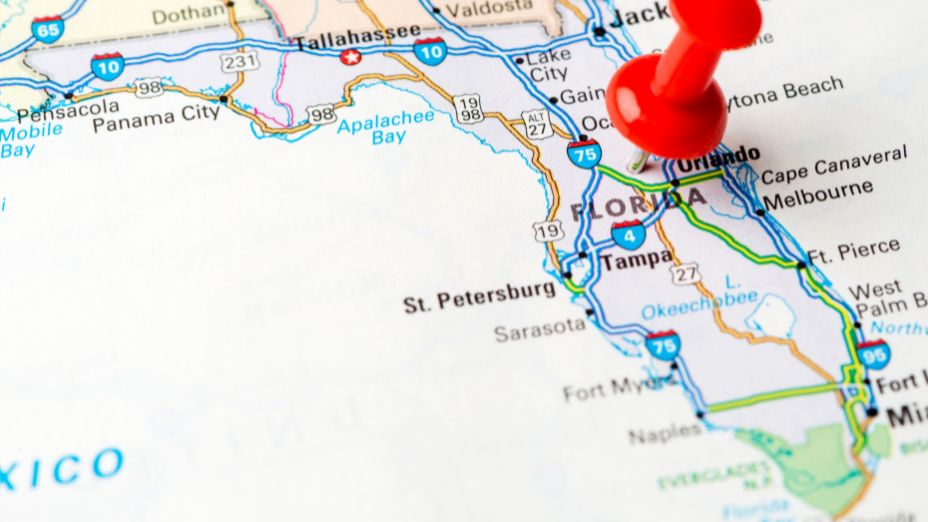
In Venice, Florida, a website is no longer a static online brochure. The businesses thriving along Miami Avenue, at the Venice Fishing Pier, and in South Gulf Cove are leveraging a new generation of intelligent, dynamic, and deeply local websites. These “smart websites” are fundamentally changing the design and function of a local business’s digital home. They’re not just about looking good—they’re about thinking, adapting, and converting with the precision and charm that reflects the Venice community itself. For local companies, this shift is the difference between being found and being forgotten.
What Makes a Website “Smart”?
A smart website uses data, automation, and artificial intelligence to deliver a personalized, efficient, and proactive user experience. It moves from a one-size-fits-all presentation to a one-to-one interaction. For a Venice business, this means your site can behave differently for a snowbird researching seasonal rentals than it does for a lifelong resident looking for a dentist.
The Core Pillars of a Smart Website:
-
AI-Driven Personalization: Tailors content in real-time based on user behavior and location.
-
Predictive User Experience (UX): Anticipates user needs and guides them intuitively.
-
Local Data Integration: Seamlessly pulls in and displays dynamic local information.
-
Automated Conversion Tools: Engages and qualifies visitors without manual intervention.
-
Performance Intelligence: Self-optimizes for speed and Core Web Vitals.
How Smart Website Design is Changing the Game in Venice
1. From Generic to Hyperlocal & Adaptive Homepages
The old design had a fixed hero image. The smart website detects a user’s intent and location to display the most relevant message.
-
For a Tourist: A visitor searching from out of state might see a homepage banner for “Book Your Dolphin-Sighting Kayak Tour Today!” with imagery of the Intracoastal Waterway.
-
For a Local: A user with a Venice IP address might see “Your Trusted Venice Neighbor: 24/7 Emergency AC Repair” with a prominent, click-to-call button.
-
Dynamic Content Blocks: Smart sites can automatically integrate local weather, upcoming events (like the Venice Art Festival), or traffic alerts, proving the business is active and connected to the community pulse.
2. Intelligent Navigation & Conversational UI
Menus are becoming predictive. Instead of forcing users to hunt, smart sites use AI to analyze click patterns and promote the most sought-after pages.
-
A Venice Realtor’s Site: Might detect a user spending time on “waterfront homes” and then prominently surface a “Live Waterfront Cam: Charlotte Harbor” feed or a guide to “Dock Regulations in Venice” in the sidebar.
-
Integrated AI Chatbots: A widget doesn’t just say “Chat with us.” It proactively asks, “Planning a visit to Shark Tooth Beach? Ask me about our rental gear delivery!” This provides instant, 24/7 local concierge service.
3. Dynamic, Data-Powered Service Pages
Standard service pages list what you do. Smart service pages demonstrate your local expertise and authority.
-
For a Venice Landscaper: A “Hurricane Preparedness Landscaping” page doesn’t just list services. It integrates:
-
A dynamic, zip-code-based storm surge map for Charlotte County.
-
An AI-powered cost estimator that adjusts for local material costs.
-
A visual gallery automatically tagged with local landmarks (e.g., “Before & After at historic Venice Gardens”).
-
-
For a Medical Practice: It could feature a live “Next Available Appointment” widget or an AI symptom checker that provides local telehealth options.
4. Automated Local SEO & Content Hubs
The site itself becomes an SEO engine. Smart design incorporates:
-
Automated Local Schema Markup: Code that automatically tells Google about your location, services, and events, boosting visibility in the “Venice, FL” local pack.
-
Self-Updating “Local Guide” Sections: An AI content assistant can draft and update blog posts or guides based on trending local searches (e.g., “best fishing spots after the Venice Jetty renourishment”) and seasonal changes.
5. Integrated Reputation & Social Proof Displays
Trust is paramount. Smart websites design social proof into the user journey seamlessly.
-
Contextual Review Showcases: Instead of a static testimonial page, reviews are pulled dynamically from Google and TripAdvisor and displayed next to relevant services. A review mentioning “great sunset cruise” appears on the sunset tour booking page.
-
Real-Time Social Feeds: A live Instagram feed embedded on the site, showing user-generated content tagged at your location (e.g., photos from your restaurant’s patio with #VeniceFLSunset).
The Impact on Venice Businesses: Tangible Results
-
Higher Conversion Rates: Personalized experiences make visitors 3x more likely to convert (call, book, contact).
-
Deeper Local Engagement: Sites that act as local hubs build community loyalty beyond transactions.
-
Operational Efficiency: Automated FAQs, booking, and lead qualification free up staff to focus on in-person service.
-
Competitive Insulation: A smart website creates a moat that generic competitor sites cannot easily cross.
The Future-Proof Venice Website: A Checklist
Is your website evolving? Ask if it has these smart design elements:
-
Personalization: Does it change based on user type (tourist vs. resident)?
-
Local Integration: Does it display dynamic local data (events, weather, news)?
-
Conversational AI: Does it offer a 24/7 intelligent chat or assistant?
-
Predictive UX: Does navigation or content adapt to user behavior?
-
Automated Marketing: Does it capture leads and nurture them without manual input?
-
Blazing Speed: Does it load instantly on a mobile phone at Venice Beach?
Designing for the Venice of Tomorrow
The charm of Venice lies in its unique blend of natural beauty, community spirit, and thoughtful growth. The businesses that will define its future are those whose digital presence mirrors these values. A smart website is more than a design trend; it’s a strategic business asset that thinks locally, engages personally, and works tirelessly to connect your Venice business with the community it serves. In a destination as special as ours, your website shouldn’t just inform—it should impress, assist, and understand.